
Adding Delta 9 to your favorite drink can be exciting—but it only stays enjoyable when the dose is consistent. That’s where a cbdMD Delta 9 THC Mixer comes in: it’s designed to help you distribute cannabinoids more evenly, so you’re not stuck with guesswork from batch to batch or overwhelmed by a stronger-than-expected sip.
In this article, we’ll walk through the practical steps that make a difference—how to check label potency, plan your target dose based on your tolerance and any other THC you may be consuming, and stir properly to reduce uneven dosing. You’ll also learn why paying attention to flavor intensity alongside THC strength helps you fine-tune what you’re really drinking, so you can feel confident before you finalize your mix plan.
Great Points
- cbdMD Delta 9 THC mixers help disperse cannabinoids for uniform drink dosing, supporting safer, predictable labeling and consumption.
- Verify mixing conditions like temperature, pH, and final volume to prevent inaccurate potency and require visual inspection after mixing.
- Start with conservative servings and adjust in small, measured steps to balance flavor and strength without masking off-quality signals.
- Track onset (30–120 minutes for ingestion), peak impairment timing, and total effect duration to avoid stacking and unsafe redosing.
- Store mixtures in light-resistant, airtight containers and maintain batch records for compliance, freshness, and consistent dosing.
How cbdMD Delta 9 THC Mixer Works in Drinks
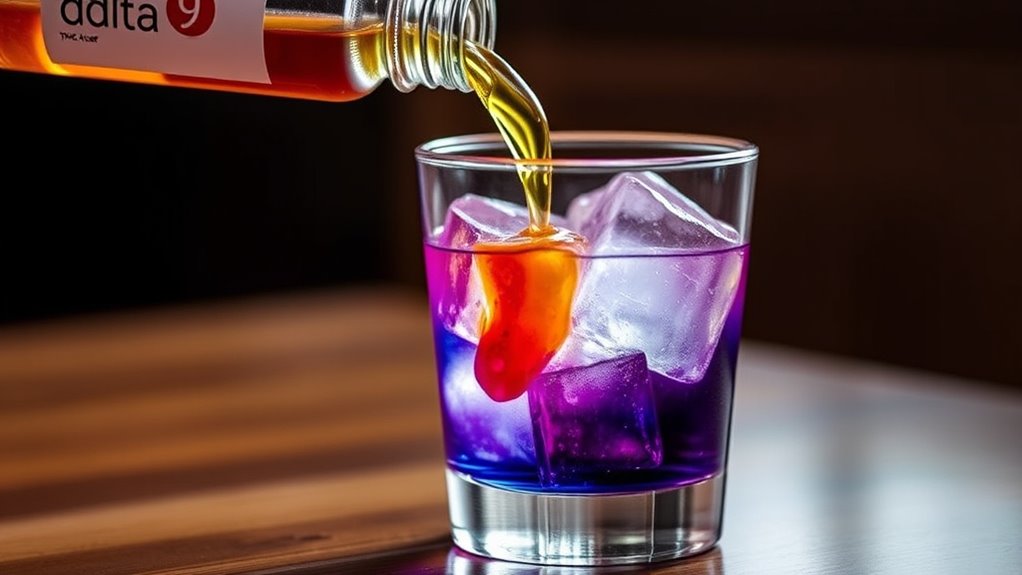
When you add the cbdMD Delta 9 THC Mixer to a beverage, it’s designed to disperse the cannabinoids so you get a more uniform distribution across the drink rather than localized “hot spots.” From a compliance perspective, that uniformity supports more predictable dosing, which matters for labeling, batch records, and consumer safety documentation. You should verify mixing conditions—temperature, pH range, and serving volume—per your internal SOP to minimize precipitation or phase separation. For Drink Customization, the mixer enables controlled Flavor Infusion without altering the intended potency profile, provided you record all additions and final weights. Maintain COA alignment and lot traceability, then document visual inspection results after mixing. If you observe separation or off-odor, pause distribution and conduct corrective testing before release.
What Effects to Expect When Mixing Delta 9
When you mix Delta 9, you should expect onset and peak effects to vary by product and your individual tolerance, so document timing and perceived intensity in your records. The intensity will typically depend on dose and can scale quickly, increasing your risk of exceeding intended limits. Be alert for side-effect patterns (e.g., anxiety, dizziness, impaired coordination, or elevated heart rate) and seek guidance if effects fall outside your expected tolerance or become persistent.
Onset And Peak Effects
As you mix CBD with Delta 9 THC, you should expect a predictable effect timeline and document it for safety and compliance—Delta 9 typically starts showing noticeable psychoactive effects within about 15–60 minutes after inhalation or roughly 30–120 minutes after ingestion, while CBD may modulate intensity without reliably eliminating impairment. Track onset timing and peak duration in your log, including start time, route, and any food intake. For regulatory risk management, treat peak effects as the window of highest functional impairment, even when CBD is present.
| Route | Typical onset timing |
|---|---|
| Inhalation | 15–60 min |
| Ingestion | 30–120 min |
| Phase | Peak duration |
| Rising effects | ~1–3 hrs |
| Highest impact | ~2–4 hrs |
| Gradual decline | afterward |
Intensity Depends On Dose
Dose is the primary driver of intensity for CBD + Delta 9 mixing, so you should document what you take (mg of each, total amount, and serving size) before you assess effects. Regulators expect dosage accuracy, because small deviations can change performance and compliance with label directions. For planning, calculate your Delta 9 per serving, and keep a record of the drink volume, timing, and any dilution steps. If you increase Delta 9 in measured increments, you’ll generally see stronger overall perceived intensity, while CBD may moderate character rather than cancel it. Also track flavor enhancement: higher concentrations can amplify taste and aroma, which can affect your perception of potency even when mg stays constant. Maintain consistent batches for reliable comparisons and risk assessment.
Possible Side Effects Patterns
Once you’ve documented your CBD and Delta 9 amounts per serving, you can start mapping the typical side-effect patterns you might notice from Delta 9 exposure in a mixed product. Expect side effects to follow dose-related timing: mild effects often appear within 30–90 minutes, then peak and taper. Common patterns include dry mouth, drowsiness, altered heart rate, dizziness, and impaired coordination; some users report mood or appetite changes. Your individual responses can vary widely, so treat user experiences as only preliminary evidence. Log onset time, duration, and severity, and note any confounders like caffeine or alcohol. From a compliance and health considerations standpoint, you should define stop criteria (e.g., persistent tachycardia, fainting, severe anxiety) and escalate care if symptoms worsen.
How to Dose cbdMD Delta 9 THC Mixer by Taste
Start low with cbdMD Delta 9 THC Mixer and record your dose, onset time, and any adverse effects before adjusting. Then adjust by taste—if the flavor profile feels too strong for your tolerance, scale the amount and document the change rather than compensating later. Finally, balance flavor with potency by confirming you stay within your planned use limits and keeping consistent preparation details for traceable results.
Start Low, Adjust By Taste
Before you mix flavors, begin with a conservative serving and evaluate effects, since CBD and delta-9 THC can produce different responses depending on your tolerance and any other substances you’ve used. Start by recording the serving size, time of consumption, and any sensory experiences, including changes you notice in beverage choices and taste preferences. Use mixing techniques to add the Mixer gradually, not all at once, and keep your ingredient combinations consistent during drink experiments. If flavor enhancements are needed, make personal adjustments by increasing only the Mixer amount in small increments, then wait for onset before documenting the results. Follow your label dosing guidance and avoid exceeding recommended limits. Use the same glass, volume, and temperature to reduce variability. Continue with beverage-choice iterations until your desired sensory profile matches your target personal adjustments, without masking risk signals.
Balance Flavor With Potency
Balancing flavor with potency means you dose the cbdMD Delta 9 THC Mixer in small, measurable steps so you can match taste without overshooting expected effects. Start with a pilot batch using your target drink combinations, record date, lot number, serving size, and mixer dose in mg. Wait for full mixing, then do taste evaluation using consistent flavor profiles. If you want taste enhancement, increase in minimal increments, not by “eyeballing.” Maintain potency balance by capping total Delta 9 per serving and per day based on your tolerance and any applicable limits. Document perceived strength, onset timing, and any adverse effects. If flavor masks potency or you notice disproportionate effects, stop adjusting and reassess with reduced dosing for the next batch.
Best Mixers and Drink Styles for Delta 9
When you’re building a Delta 9 CBD mixer, your first step is to define the dosing and document it before you pour anything—because compliance and product consistency depend on it. Next, pick mixer varieties that support predictable solubility and label alignment. Risk-assess each drink style for ingestion timing, carbonation effects, and serving-size control. Choose neutral bases like soda water or unsweetened tea for tighter potency tracking, or use low-dose drink enhancements such as citrus concentrates where formulation records can be audited.
| Mixer style | Regulatory/QA note |
|---|---|
| Carbonated water | Confirm stability, avoid dosing drift |
| Iced tea | Record pH and extraction limits |
| Lemonade base | Track sugar impact on mixing |
| Sports drink | Verify per-serving THC content |
Keep batch logs, COAs, and variation tolerances.
Flavor Pairing Tips to Keep Your Drink Enjoyable
To keep your Delta 9/CBD mixer enjoyable while staying compliant, you should pair flavors that mask any harshness without complicating dose verification. Choose Flavor combinations with clear labeling, consistent sensory outcomes, and documented ingredient synergy. Start with a controlled base (e.g., citrus or berry) and add one accent at a time so you can record taste balance and avoid masking indicators of off-plant quality. Prioritize drink enhancement from sweet-tart notes, herbal extracts, or light vanilla; avoid strong flavors that could conceal carbonation loss or sediment. Keep records of batch date, flavor lot, and final volume, then re-check ingredient synergy for any new sweetener, acid, or botanicals. If you taste bitterness, adjust gently and document changes.
How Long Delta 9 Takes to Kick In After Mixing
After you mix CBD and Delta 9, you should document the expected onset time, which typically occurs within about 30 minutes to 2 hours, then report any delayed effects. Peak effects can vary based on dose, food intake, tolerance, and product formulation, so you’ll want to track timing from the last drink/sip and avoid exceeding serving limits. For compliance and harm-reduction, note that the overall duration is often several hours (commonly 4 to 8), and plan not to drive or operate equipment until effects fully subside.
Onset Time After Mixing
Even though combining CBD with Delta 9 THC doesn’t “override” cannabinoid pharmacokinetics, you should still plan for variability in onset time after mixing, since absorption depends on factors like whether you’re using an ingestible, tincture, or inhaled format, your prior THC exposure, and your individual metabolism. Document your onset variability window in your batch record, including drink temperature, mixing volume, and time since addition.
Track onset conservatively: the FDA-like risk stance is “assume slower.” Use this clocking aid for procedure validation:
| Matrix | Expected onset range | Record trigger |
|---|---|---|
| Oil/tincture mixed drink | 30–90 min | First noticeable effect |
| Capsules/candies | 45–120 min | Functional impairment check |
| Edible emulsion | 60–150 min | No earlier than minimum |
| Any fasted vs fed | ± variance | Repeat observer notes |
If effects emerge outside your documented range, stop use and reassess.
Factors Affecting Peak Effects
Peak effects from Delta 9 THC after mixing can vary materially, so you should treat “time to kick in” and “time to peak” as process-dependent attributes rather than fixed values. For compliance and risk assessment, document variables that influence peak timing: tolerance levels, individual metabolism, drink temperature, mixing techniques, and beverage consistency. If you have higher tolerance, you may perceive delayed or reduced peak, so record your baseline experience level before changing dose. Warmer drink temperatures can accelerate absorption, while inconsistent mixing techniques can cause uneven cannabinoid distribution. Confirm cannabinoid synergy expectations by tracking how CBD and Delta 9 interact in your specific formulation, and align with personal preferences without exceeding your internal safety threshold. Use standardized mixing steps and keep batch logs to support reproducibility across runs.
Typical Duration Of Effects
Typically, you should plan for Delta 9 THC effects to begin within about 30–90 minutes after mixing, though this window can shift based on your documented variables (e.g., tolerance, metabolism, drink temperature, and mixing consistency). From a compliance and risk perspective, you should track not just onset but duration factors: whether you ate beforehand, the fat content of your meal, and how consistently the product was blended. Effects often peak later, so avoid reassessing impairment too early. Individual variability is expected; some people experience faster onset or longer effects even under identical dosing. For documentation, record time of mixing, time of consumption, and subjective effects, and don’t operate vehicles or machinery until your personal time window is confirmed and stable.
Tolerance, Timing, and Spacing Doses Responsibly
Before you increase or repeat any CBD/Delta-9 THC mix, you should assess your existing tolerance and document the last dose amount, onset time, and any effects you felt, since tolerance can build quickly and prolonging dosing too soon can increase impairment risk. Track tolerance levels across sessions, and keep a log tied to responsible consumption and any measured potency changes from your drink.
Use a conservative timing window: wait for full onset and peak effects before considering additional servings. If you’re unsure whether effects have stabilized, treat that as a “no-repeat” condition until you can confirm. Space doses to reduce stacking risk, and avoid compensating for delayed onset by immediately redosing. Any adverse effects or impaired coordination should trigger dose reduction or discontinuation, and you should consult medical guidance.
Avoiding Common Mixing Mistakes With Delta 9
When you mix CBD with Delta 9 THC, you’re taking on compounded risk, so you should avoid common mistakes like redosing on a guess, mixing multiple products with overlapping cannabinoid strengths, or using an unverified serving label—because those errors can make impairment timing unpredictable and make it harder to document dose-response. You should follow written mixing techniques: measure by weight or calibrated dropper, then record lot numbers, final volume, and time added. Don’t combine “proprietary blends” without reconciling cannabinoid ranges; you need a single, traceable target dose. Verify that the label matches the product you actually used, and document any deviations. For flavor balance, mix slowly to prevent foaming or incomplete dispersion, then observe for settling before measuring again.
Storage, Freshness, and Travel Tips for the Mixer
To keep your CBD + Delta 9 THC mixture consistent and defensible for dosing, you should store it exactly as directed on the label and treat storage conditions as part of your documented process. Use appropriate storage containers that are light-resistant, airtight, and compatible with cannabinoids to minimize volatilization and contamination. Follow freshness guidelines on the package, including any “use by” or post-opening periods, and record receipt and open dates in your batch log. For travel precautions, keep the mixer sealed, in original packaging when required, and protected from heat, direct sun, and temperature swings; use a cooler if the label indicates. Apply handling tips: avoid repeated opening, wipe seals before closing, and keep away from children and unauthorized access. Inspect container integrity before each pour.
Checking THC Strength and Labeling Before You Pour
Start by confirming the THC strength you’re using from the product label and any accompanying COA, then verify it matches the batch you’ve logged for that pour. Before you add anything to your drink, you should document the lot number, serving size, and target milligrams, and you should cross-check THC labeling accuracy against current regulatory requirements. If the label and COA disagree, you should treat it as a nonconformance and pause the pour until corrected documentation is obtained. Use dosage guidelines to calculate your exact amount per serving, rounding only as your SOP permits. Track who approved the calculation, the time of compounding, and the final prepared concentration. This audit trail helps you mitigate dosing risk and guarantees consistent batch-to-batch compliance.
Who Should Skip a Delta 9 THC Mixer?
After you’ve confirmed the THC strength against the label and COA for that specific batch, you should only proceed if the mixer fits your risk controls—otherwise you’re better off skipping it. Skip a Delta 9 THC mixer if you’re under legal restrictions tied to workplace, travel, licensing, or state/jurisdiction rules; “might contain” claims can still trigger compliance issues. Also skip if you have health conditions that increase sensitivity to cannabinoids, including pregnancy, breastfeeding, seizure disorders, or serious cardiovascular or psychiatric history. If you take medications with known THC interaction risks, document your prescriber’s guidance first—don’t improvise. You should also skip when you can’t maintain batch-level records (COA, lot number, serving calculations) or when you can’t reliably measure dose in your drink.
Common Questions
Does Mixing Affect Delta 9 THC Potency or Consistency in the Drink?
Yes—mixing can affect both delta 9 potency and drink consistency. You’ll see potency variations if dosing isn’t accurately measured, if the mixer isn’t fully dispersed, or if you don’t control temperature and mixing time. Consistency factors include ingredient ratios, emulsification, settling, and container-to-container agitation. For regulatory and safety purposes, you should document grams/volume added, mix duration, and observed homogeneity, and avoid assuming label potency without batch verification.
Can I Use the Mixer With Hot Coffee or Tea Safely?
Yes, but only if the product label allows hot beverage compatibility. Treat the mixer like a controlled infusion: use low heat, avoid boiling, and stir until fully dissolved. Document your infusion methods—temperature, stirring time, and dose per serving. Don’t add to scalding coffee or brew right after hot water contacts your cup. If you notice separation, off-odors, or uneven clarity, discard and don’t consume. Follow local age/possession rules.
How Long Do I Have to Consume a Prepared Mixed Drink?
You should consume your prepared mixed drink promptly—ideally within 2–4 hours—then discard it. Use documented shelf life guidance from the label or your batch notes; don’t rely on “it still smells fine.” Keep the drink refrigerated, tightly sealed, and away from heat/light. Follow consumption guidelines: only consume the portion you intended, don’t top off. If it sat out longer than recommended, don’t consume.
Will Delta 9 Interact With Alcohol or Medications I’M Taking?
Yes—Delta 9 can interact with alcohol and some medications, increasing impairment and adverse effects. Treat this like a fuse: the mix can burn faster than expected. Delta 9 interactions may alter Alcohol metabolism, and Medication effects can be intensified (sedatives, opioids, antidepressants, antihistamines). Check your labels, follow dosing limits, avoid mixing until you know your response, and consult a clinician or pharmacist for Health considerations and documentation. Don’t drive; record timing, dose, and symptoms.
Is the Mixer Suitable for Vegetarians or Those With Dietary Restrictions?
Yes, it may be suitable, but you need to verify dietary labels before use. Check the ingredient list for vegan ingredients and confirm there’s no dairy, gelatin, or other animal-derived components. If you have allergies, gluten-free needs, or other dietary restrictions, review for allergen statements and manufacturing cross-contact info. For regulatory compliance, keep product documentation (batch/COA if provided) and follow serving guidance to reduce misuse risk.
Overall
Before you pour, take a moment to verify the THC strength, review the label details, and clearly document your target dose—this helps reduce risk and keeps your use consistent. Then store the mixer properly to maintain freshness and potency, and track your intake over time (taste can vary, so timing and planned dosing matter). As a best practice, follow the directions exactly, avoid stacking doses, and keep clear records so you can make responsible adjustments if needed.
Act now: if you’re pregnant, underage, driving or operating vehicles, or taking medications that may interact with THC, skip delta 9 mixers entirely and choose a safer alternative. If you do use delta 9, start with the lowest effective amount, pace your drink, and prioritize safety over speed—your future self will thank you.