
If you’re looking for a simple, everyday way to support wellness, Global Health Farms CBD Gummies offer a full-spectrum hemp option designed to fit right into your routine.
Instead of taking CBD as an afterthought, these gummies focus on consistent, dose-based use—supporting goals people commonly associate with cannabinoids such as stress relief, better sleep, and day-to-day recovery.
Of course, results can vary from person to person, which is why choosing a product with transparent quality signals matters as much as the formula itself.
In this article, we’ll walk through what “full-spectrum” really means, how dosing typically works from day to day, and which label details to prioritize to help you set evidence-aligned expectations.
You’ll also learn why third-party testing and clear documentation are essential for reducing uncertainty and making sure you know exactly what you’re taking.
Great Points
- Global Health Farms CBD gummies offer full-spectrum hemp compounds, designed to support whole-plant cannabinoid interaction.
- Check third-party COAs for CBD potency and contaminant testing to confirm quality and accurate labeling.
- Use a low-dose schedule—morning, midday, evening, or as-needed—and adjust based on your response after 3–7 days.
- Common side effects may include drowsiness, dry mouth, diarrhea, appetite changes, and lightheadedness, so monitor daily activities.
- CBD may interact with medications via liver enzymes (CYP3A4/CYP2C19), so consult a clinician if you take prescription drugs.
What “Full-Spectrum CBD” Means in Global Health Farms Gummies

When you see “full-spectrum CBD” on Global Health Farms gummies, it generally means the product contains CBD plus other naturally occurring cannabinoids and plant compounds from hemp—rather than isolating CBD alone. From a public-health and nutrient lens, this matters because these “whole-plant” profiles may better reflect the balance found in hemp, supporting potential full spectrum benefits like broader cannabinoid interaction while still delivering CBD’s core effects. Pay attention to extraction methods, since they influence what’s included, how consistently compounds are preserved, and whether unwanted constituents are minimized. Look for evidence of third-party testing for cannabinoid content, residual solvents, and contaminants. If you’re choosing gummies, prioritize transparent labeling over vague claims, and keep expectations realistic about outcomes and dosage.
How CBD Gummies Are Typically Used for Everyday Wellness
For everyday wellness, most people use CBD gummies as a consistent, low-dose way to support the body’s stress response and help promote a sense of balance—rather than as a fast-acting treatment. You’ll often fit them into daily routines: a morning dose for steadier focus, or an evening dose alongside sleep habits. Many choose them as an adjunct to evidence-based basics like nutrition, hydration, movement, and good stress relief practices.
| When you take them | Typical goal | Public-health tip |
|---|---|---|
| Morning | steady mood | pair with breakfast |
| Midday | tension buffer | take with water |
| Evening | wind-down support | keep consistent timing |
| As-needed | mild reset | track effects, avoid escalation |
Which Benefits People Look for From Full-Spectrum CBD Gummies
What benefits are most people actually trying to get from full-spectrum CBD gummies? Many seek supportive wellness effects tied to CBD’s interaction with the endocannabinoid system, especially for stress and mood regulation. You’ll often see people aiming for calmer feelings, better sleep quality, and reduced perceived anxiety, using consistent daily intake. Some also look for muscle recovery or comfort after activity, aligning with public-health goals of maintaining mobility and reducing inflammation-driven soreness, though evidence varies by condition and dose. Beyond CBD, you may prefer gummies made with natural ingredients that complement nutrition—like plant-based extracts and added micronutrients—because overall dietary patterns matter for long-term health. If you’re expecting disease treatment, you should adjust expectations.
How to Choose the Right CBD Gummy Strength and Serving Size
Choosing the right CBD gummy strength and serving size starts with matching your dose to your goal and your body’s typical response—without assuming that “more” is automatically better. Start low, then titrate based on effects like sleep quality, stress relief, or pain perception. For safety and consistency, follow dosing guidelines from reputable sources and your clinician if you’re pregnant, nursing, on sedatives, or using anticoagulants. Check the labeled CBD per gummy, then consider how many gummies you’ll need to reach a practical daily dose, staying within recommended ranges. If you’re new to CBD, pick lower-strength options and allow several days to assess tolerance. Choose gummy flavors you’ll reliably take, because adherence drives outcomes more than taste.
What to Check on the Label for Global Health Farms Quality
When you’re evaluating Global Health Farms CBD gummies, start by checking the label for clear, testable information—because quality starts with transparency. Look for label transparency: exact CBD content per gummy, total milligrams per container, and serving size consistency. Prioritize ingredient sourcing by confirming the source of hemp (region/country), plus a full list of ingredients—especially fats, sweeteners, and any allergens. Also verify whether the gummy contains full-spectrum ingredients, and note any added nutrients that affect diet relevance, like vitamin content or fiber.
| Label item | What you should see |
|---|---|
| CBD per gummy | Clear mg value, not vague ranges |
| Hemp source | Specific origin for ingredient sourcing |
| All ingredients | Full list with allergens highlighted |
Third-Party COAs: Why They Matter for Full-Spectrum CBD Products
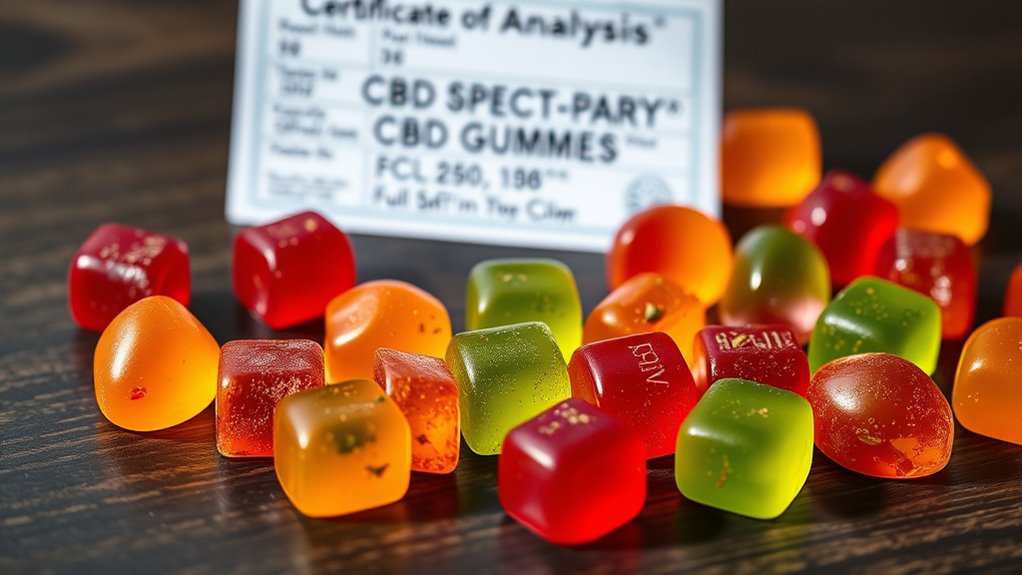
After you’ve confirmed the basics on the label, you’ll want to look at third-party COAs to verify what’s actually in the gummy—especially for full-spectrum CBD. These certificates come from independent labs that run standardized tests, giving you evidence for both potency and safety. Focus on cannabinoid content (so the advertised CBD level matches reality), and check for contaminants like heavy metals, pesticides, microbes, and residual solvents that can undermine public health. Reliable COAs also report batch or lot numbers, helping you trace results to your exact product run. When you see consistent third party testing and clear quality assurance details, you reduce the risk of under-dosing, adulteration, or exposure to harmful residues.
Full-Spectrum vs Broad-Spectrum vs CBD Isolate: What’s the Difference
You’ll often see “full-spectrum,” “broad-spectrum,” and “CBD isolate” on CBD gummies, but they’re not the same—and the difference matters for both consistency and safety. Full-spectrum products contain CBD plus other naturally occurring cannabinoids and trace THC, so you may experience broader “entourage” effects; broad-spectrum removes THC while keeping many other compounds. CBD isolate is pure CBD, with no other cannabinoids, which can reduce variability across batches but may feel less nuanced. From a public-health lens, look at CBD extraction methods: solvent choice, winterization, and filtering influence what ends up in the gummy. Also consider Terpene benefits—these aroma compounds are more likely in full- or broad-spectrum blends and may support anti-inflammatory signaling.
How to Start Low and Find Your Ideal Gummy Routine
Start with a low-dose gummy and track how you feel for several days before making changes, since stronger isn’t always better. Adjust your timing and frequency to match your goals and daily schedule, and consider taking it consistently rather than in large spikes. If you notice side effects or no benefit after a reasonable trial, scale back or pause and talk with a qualified clinician—especially if you take other medications.
Start With Low-Dose Gummies
Starting with a low-dose CBD gummy helps you gauge how your body responds while minimizing the risk of side effects like drowsiness or stomach upset. Start by choosing one of the gummy flavors you’ll consistently tolerate, then follow clear dosing guidelines: begin at the low end of the label and track effects for several days. If you notice sleepiness or GI discomfort, reduce or stop; if nothing changes after a week, you can consider staying at the same dose longer before any increase.
| Day | Dose focus | Notes |
|---|---|---|
| 1 | Lowest dose | Note sleep, appetite |
| 2 | Same dose | Check gut comfort |
| 3 | Same dose | Record energy |
| 4 | Same dose | Watch mood shifts |
| 5 | Same dose | Review trends |
Adjust Timing And Frequency
After you’ve logged a few days at the lowest dose, you can fine-tune *when* you take your CBD gummies and how often—because consistent timing helps you better detect effects on sleep, anxiety, appetite, or soreness, while reducing the odds of taking more than you need. Start with timing strategies: take your gummy at the same time daily, ideally with a consistent meal pattern. For sleep support, try evening use 1–2 hours before bed; for daytime stress or discomfort, choose morning or early afternoon. Use conservative frequency recommendations: begin once per day, then reassess after 3–7 days. If effects are mild, consider every-other-day dosing before increasing. Track outcomes and stop or scale back if you notice excessive sedation, appetite changes, or GI upset.
Common Side Effects and Drug-Interaction Warnings for CBD Users
As you try CBD gummies, you should know that common side effects can include sleepiness, diarrhea, appetite or weight changes, and dry mouth. CBD can also interact with medications—especially those broken down by liver enzymes (like CYP3A4 and CYP2C19)—so mixing it with prescriptions or alcohol may raise side-effect risk. Talk with a clinician or pharmacist before starting, and start low as you track symptoms and any medication changes.
Common Side Effects To Know
When you use CBD gummies, a few side effects are fairly common and worth knowing up front. You might notice mild drowsiness, dry mouth, diarrhea, or changes in appetite, especially when gummy ingredients include higher amounts of cannabinoids or added sweeteners. Some people also report lightheadedness or fatigue, which can affect driving or operating equipment. These effects are usually dose-related, so follow dosage guidelines closely and start low, then reassess how you respond over several days. If you’re prone to stomach upset, take gummies with food to reduce GI discomfort. Seek medical advice if symptoms persist or worsen, or if you have underlying liver disease.
Drug Interactions CBD Warning
Drug interactions are a real concern with CBD gummies because CBD can inhibit liver enzymes (especially CYP3A4 and CYP2C19) that many medicines rely on to clear from your body—so drug levels can rise or effects can change. When you use CBD, prioritize CBD safety precautions and evidence-based monitoring, not guesswork.
- Check for interactions with anticonvulsants, anticoagulants, immunosuppressants, and some antidepressants; toxicity or bleeding risk may increase.
- Expect more sedation if you combine CBD with opioids, benzodiazepines, or sleep aids.
- Watch for enzyme-mediated changes in statins and some antifungals/antibiotics.
- Do medication consults with your clinician or pharmacist before starting, especially if you have liver disease or take multiple drugs.
If side effects like dizziness, abnormal bruising, or marked fatigue appear, stop and seek care.
How to Store Gummies and Keep Their Potency at Home
To keep your CBD gummies potent and consistent at home, you need to store them the way manufacturers intend—away from heat, light, and moisture, which can degrade cannabinoids and reduce shelf-life. For evidence-based quality, choose a cool, dry cabinet and keep the container tightly sealed. Use humidity control measures (like a desiccant pack if provided or a clean, dry airtight jar) to prevent sugar bloom and clumping, which can correlate with faster potency loss. Avoid bathrooms, kitchens, and near windows where temperature swings and UV exposure are common. Check labels for “best by” dates, and rotate bottles so older gummies get used first. If gummies smell off, change texture, or taste harsher than usual, don’t assume freshness—discard them.
Common Questions
Are Global Health Farms CBD Gummies Legal in My Country or State?
They might be legal, but it depends on your CBD legality rules and state regulations. In many places, only hemp-derived CBD (≤0.3% THC in the U.S.) is allowed; full-spectrum products can still trigger restrictions. Check your state’s hemp laws, labeling requirements, and any THC limits, and review international laws if you travel. Also protect consumer rights: verify third-party lab reports (COAs) and avoid products missing compliant testing.
Do These Gummies Contain THC, and Will They Show on Drug Tests?
Yes—these gummies may contain trace THC depending on the product’s CBD source and formulation, so you should check the latest Certificate of Analysis and label for exact THC content. For drug testing, any THC exposure can potentially trigger a positive urine drug test, especially at sensitive cutoff levels. Evidence shows standard immunoassays detect THC metabolites; confirmatory GC/MS testing is more specific. If you need zero risk, avoid full-spectrum products.
Are the Gummies Vegan, Gluten-Free, or Free From Common Allergens?
Yes—if the label says vegan and gluten-free, you can treat them accordingly; but you should verify by checking allergen labeling on the package, since formulations change. Look for explicit “vegan ingredients” statements and “gluten-free” claims from the manufacturer. For common allergens (milk, egg, soy, wheat, peanuts, tree nuts), don’t assume—scan allergen labeling and ingredient lists. If you have allergies, consult your clinician before using.
How Long Do Full-Spectrum CBD Effects Typically Last After Eating a Gummy?
Full-spectrum CBD effects after eating a gummy typically last about 4–8 hours, with onset around 30–90 minutes. Duration factors include your dose, metabolism, body fat, meal timing, and product concentration. Individual variations are common, so some people feel effects longer or shorter. For public-health safety, don’t mix with alcohol or high-sedating meds, and start low to gauge response. If you feel unusual sleepiness, stop and consult a clinician.
Can I Take These Gummies With Alcohol, Caffeine, or My Prescription Medications?
You generally shouldn’t mix these gummies with alcohol, caffeine, or prescription meds without checking first, due to CBD interaction concerns. Alcohol effects can worsen dizziness, drowsiness, and impaired coordination, and CBD may add to that risk. Caffeine could increase jitteriness and affect sleep. With medications, CBD can interfere with liver enzymes (like CYP450), changing drug levels. Talk to your clinician or pharmacist before combining.
Overall
If you’re looking for a convenient, evidence-informed way to support daily stress, better sleep, and post-workout recovery, Global Health Farms CBD Gummies are worth considering—particularly when third-party testing verifies potency and screens for contaminants. Take a smart starting point with a low dose, note how you feel, and adjust gradually to match your body’s response. Before you commit, review drug-interaction guidance and follow proper storage practices to help preserve cannabinoid stability and product quality.
Ready to choose a wellness routine you can trust? Compare transparency, testing results, and ingredient clarity, and consider whether a full-spectrum hemp approach may align with the “entourage” effect for broader support. If you’re ready to explore a safety-first option today, take the next step now and make your move toward consistent, worry-reducing wellness.