
If you’ve noticed your dog taking longer to get going after rest, hesitating on stairs, or moving a bit slower than usual, joint comfort may be worth a closer look. Hip, mobility, and everyday movement can be impacted by inflammation and the natural wear that comes with age—especially in active pups or those with previous joint issues. That’s where Paw CBD Hip Plus Joint Chews come in: they’re designed to help support comfortable movement through targeted ingredients aimed at the pathways involved in joint wellness.
In this article, we’ll explore what makes Paw CBD Hip Plus Joint Chews a popular option for dogs that need extra support, including how CBD and joint-supporting nutrients work together. We’ll also cover how to choose the right strength for your dog and what to monitor as you build consistency—because the most meaningful changes often come from using the chews daily and tracking mobility over time.
Great Points
- Paw CBD Hip Plus Joint Chews support hip and joint comfort by combining CBD with joint-focused ingredients for inflammation and pain signaling.
- Common signs of joint discomfort include stiffness, limping, reduced jumping, and reluctance to rise, especially after rest.
- Give chews consistently at the same time daily, ideally with meals, and follow label weight-based dosing.
- Noticeable mobility improvements often take 7–14 days, with continued gains up to 3–4 weeks.
- Monitor for side effects like mild GI upset or drowsiness, and consult a veterinarian if symptoms persist or worsen.
What Paw CBD Hip Plus Joint Chews Do for Dogs
Paw CBD Hip Plus Joint Chews are designed to support your dog’s joint comfort and mobility by pairing CBD with targeted joint ingredients. In an evidence-based framing, CBD is investigated for anti-inflammatory and analgesic effects, which may help reduce discomfort that limits canine comfort. The product’s joint-focused components aim to support cartilage health and connective tissue function, promoting joint flexibility over time. When you follow recommended dosing, you’re supporting a structured approach: potential modulation of inflammatory signaling plus nutritional substrates relevant to joint mechanics. This is best viewed as adjunctive support—symptom-focused rather than curative—consistent with how veterinary nutraceuticals are typically evaluated. If your dog’s activity improves, it likely reflects better comfort during movement.
Signs Your Dog Could Benefit From Joint Support
If you notice limping or noticeable stiffness—especially in the morning—your dog may be experiencing joint discomfort. You might also see slower play, reduced willingness to jump or go for walks, or a general decline in mobility over time. If these signs persist, it’s reasonable to discuss joint-support options with your veterinarian to confirm the cause and guide evidence-based management.
Limping Or Stiff Mornings
You may notice that your dog limps after resting or seems stiff when they first get up, especially in the morning or after periods of inactivity—classic signs that joint structures may be irritated or degenerating. These patterns often reflect common limping causes and can align with morning stiffness seen in osteoarthritis, where inflammatory mediators and cartilage wear make early movement harder. Pay attention if stiffness improves as your dog warms up, or if limping persists or worsens over days.
- Track onset: note duration of stiffness and whether it’s worse after sleep.
- Check mechanics: watch for reluctance to rise, uneven weight-bearing, or reduced stride length.
- Seek vet guidance: radiographs, orthopedic exam, and pain scoring help confirm etiology and rule out acute injury.
Slower Play And Reduced Mobility
When limping and morning stiffness show up, you may also notice slower play, reluctance to jump, shorter walks, or reduced willingness to go up stairs—changes that often reflect osteoarthritis-related discomfort and progressive mobility loss. You might see shifts in playtime habits and overall activity levels, with aging effects compounding prior injury. Clinically, osteoarthritis pain can alter exercise routines, leading to deconditioning and worse mobility challenges. Use joint health–focused lifestyle adjustments: shorter, more frequent walks; warm-up time; non-slip flooring; and careful training methods that avoid high-impact jumps.
| What you notice | What it may suggest |
|---|---|
| Slower chase/return | Joint pain affecting canine comfort |
| Hesitates to jump | Reduced range of motion |
| Skips stairs | Mobility challenges, stiffness |
| Sleeps more after play | Decreased joint tolerance |
How CBD Hip Plus Supports Mobility and Comfort
While aging and wear-and-tear can reduce a dog’s range of motion, CBD Hip Plus is formulated to support everyday mobility by targeting pathways linked to inflammation and pain signaling in joint tissue. In a controlled, clinical framing, you can think of this as part of a broader Joint health approach: CBD benefits may help modulate nociceptive signaling, supporting Pain relief and Comfort enhancement without relying solely on analgesics. For an Active lifestyle, consistent use aligns with pet wellness goals where Mobility support matters most—during stairs, walks, and post-rest movement.
- Reduced inflammatory signaling in joint microenvironments
- Improved comfort perception during weight-bearing activity
- Ongoing Mobility support alongside Natural ingredients for Joint health
What’s in Paw CBD Hip Plus Joint Chews
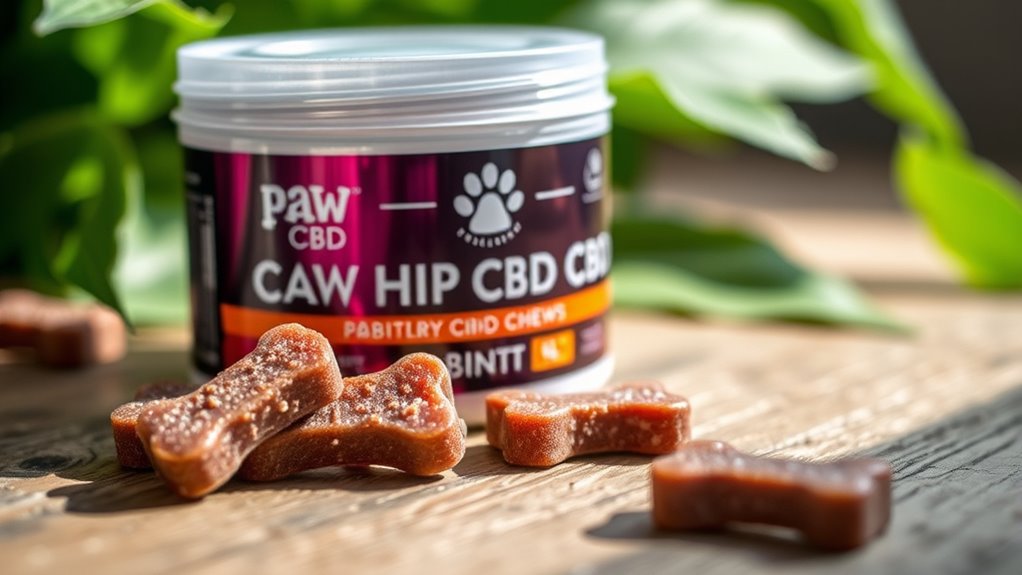
You should check the product’s CBD and phytocannabinoid profile, since dosing and cannabinoid content can drive both efficacy and safety outcomes. Review the joint-support ingredient blend for evidence-based components (e.g., anti-inflammatory and cartilage-support nutrients) and confirm the serving size aligns with the concentration per chew. Follow the administration notes exactly, and avoid adjusting the dose without veterinary guidance—especially if your dog takes other medications or has underlying conditions.
CBD And Phytocannabinoids Content
Paw CBD Hip Plus Joint Chews are formulated to deliver specific phytocannabinoids—primarily CBD—found in hemp-derived ingredients, and their biological activity is driven by how these compounds interact with the endocannabinoid system. When you evaluate CBD benefits for Dog health, you’re looking at dose-dependent Phytocannabinoid effects reported across preclinical and emerging clinical literature, including modulation of inflammatory signaling and nociceptive pathways. For pet wellness, quality matters: consistent cannabinoid sources help support predictable exposure and anti inflammatory properties. To interpret cannabinoid content responsibly, use these evidence-aligned points:
- CBD concentration and verified hemp origin for Natural alternatives
- Dosage guidelines based on body weight and product mg-per-chew labeling
- Spectrum of phytocannabinoids to contextualize Phytocannabinoid effects beyond CBD
If your vet advises, these cannabinoid sources can fit into an overall joint care plan.
Joint Support Ingredients Blend
A well-designed Joint Support Ingredients Blend in Paw CBD Hip Plus Joint Chews pairs hemp-derived phytocannabinoids with targeted joint nutrients to help support mobility and comfort. You get natural ingredients selected to complement canine wellness goals within a holistic approach. The blend is designed for evidence-backed inflammation reduction, aiming to support joint tissue where oxidative stress and inflammatory signaling can impair movement. You’ll also benefit from supplemental cofactors that may enhance cartilage and connective-tissue health, supporting therapeutic benefits across daily routine and long-term health maintenance. By coordinating hemp phytocannabinoids with joint-focused nutrients, the product leverages supplement synergy, which is consistent with how combination strategies are evaluated in veterinary nutrition. When used as directed, you’re supporting more consistent comfort and movement.
Serving Size And Administration Notes
Each serving of Paw CBD Hip Plus Joint Chews is formulated to be administered consistently, so you can align dosing with your dog’s size and mobility needs. For evidence-based use, follow the serving guidelines on the label and your veterinarian’s advice, especially if your dog takes other therapies. CBD products’ clinical outcomes depend on dose consistency, so don’t skip or double servings unless directed. Start at the recommended dose, then monitor comfort and mobility over 2–4 weeks, since behavioral changes can be gradual.
- Dose by body weight (as listed) and maintain the same dosing time daily.
- Give chews with or after food to support tolerability.
- Reassess if side effects occur or function worsens; use administration tips to guarantee full chew consumption.
Choosing the Right Chew Strength for Your Dog
Once you know your dog needs joint support, picking the right chew strength is the next step. Start by matching chew strength to your dog size, activity level, and baseline mobility. Evidence from nutraceutical and joint-support research supports using appropriately dosed products rather than assuming “more is better,” because excess nutrients can add risk without added benefit. For smaller dogs or low-activity pets, select lower-strength chews to keep intake within typical ranges used in studies and to reduce the chance of gastrointestinal upset. For larger, more active dogs, choose a higher-strength option to reach comparable exposure, but follow the manufacturer’s strength scale and veterinary guidance. If your dog is pregnant, on other supplements, or has chronic disease, confirm the target strength with your veterinarian first.
Paw CBD Hip Plus Joint Chews Dosing Made Simple

Getting dosing right is the key to getting consistent joint support from Paw CBD Hip Plus Joint Chews—and it usually comes down to matching the label’s serving instructions to your dog’s weight. You should treat the product label as the primary clinical reference, since CBD pharmacokinetics and response vary among dogs. Use the dosing guidelines by weight to select the correct chew count per dose, then keep your plan consistent to reduce variability in exposure. In practice, most owners rely on a stable chew frequency and adjust only if your veterinarian recommends it.
- Weigh your dog, then map weight to the label dose.
- Start within the labeled range; don’t exceed serving limits.
- Maintain the same chew frequency daily for at least 2–4 weeks.
When to Give Hip Plus Chews in Your Routine
Timing matters because joint-support ingredients work best when they’re dosed consistently. For evidence-backed routine integration, give Hip Plus chews at the same time daily, aligning with your dog’s regular meals. If your veterinarian recommends a schedule, follow that plan first; otherwise, start with once-daily dosing alongside food to improve consistency and reduce the chance of GI upset. Track adherence rather than chasing effects, since “best timing” is about maintaining steady exposure.
| Scenario | When to give |
|---|---|
| Daily maintenance | With the morning meal |
| Active days | With the evening meal |
| Missed dose | Give next scheduled dose only |
Keep the routine stable for several weeks, and note any tolerance issues.
How Fast You May See Improved Mobility
Within the first week, you may see early mobility changes such as slightly easier rising or more willingness to move, though response varies by dog and underlying condition. Noticeable gait improvement often shows up after consistent daily use over the next several weeks, rather than immediately. By keeping the chews in your routine every day, you’re more likely to sustain functional improvements as part of a broader joint-care plan.
First Week Mobility Changes
After you start Paw CBD Hip Plus Joint Chews, some dogs show subtle mobility changes in the first week, though the speed and degree of improvement can vary by cause and baseline severity. Your best early signal is a structured mobility assessment, repeated under similar conditions. In clinical practice, short-term perception of reduced discomfort can precede measurable gains in canine flexibility, especially when pain sensitivity is modulated. Still, CBD effects in studies tend to be gradual, so you shouldn’t expect dramatic transformation in days.
- Look for improved sit-to-stand ease and willingness to move.
- Track range of motion in a consistent mobility assessment.
- Note changes in stiffness after rest and during gentle handling.
Noticeable Gait Improvement Timing
You might start noticing a steadier gait within the first 7–14 days, especially if your dog’s mobility limitations are driven more by pain sensitivity than by advanced structural damage. In that window, CBD-supported comfort may reduce guarding, which can show up as smoother strides during your next mobility assessment. For a more evidence-based check, use simple gait analysis: record short walks on the same surface, same time of day, and compare step length, stance duration, and head/hip carriage. Some dogs show gradual improvement by 3–4 weeks, while those with severe osteoarthritis or significant joint degeneration may need longer to detect meaningful change. If you don’t see any trend after 4–6 weeks, reassess dosing and discuss alternatives with your veterinarian.
Consistent Use Benefits Daily
If you use Paw CBD Hip Plus Joint Chews consistently each day, you’re more likely to see a measurable shift in mobility patterns than with irregular dosing, since cannabinoids and related anti-inflammatory mechanisms generally require steady exposure. In clinical-style terms, you’re supporting a pharmacologic “steady-state” environment, which may translate into less stiffness and smoother gait as inflammation is repeatedly modulated. With consistency benefits, you’ll also reduce day-to-day variability in symptoms, so your dog’s comfort becomes more predictable within your daily routine.
- Start tracking steps or rise-from-rest time after 7–14 days of daily use.
- Expect subtle improvements first, with more reliable mobility by 3–6 weeks.
- Maintain dosing schedule during exercise changes to separate treatment effects from activity variability.
Safety Tips When Using Paw CBD Joint Chews
When introducing Paw CBD Hip Plus Joint Chews, start with the label’s recommended dose based on your dog’s weight and current joint needs, and don’t exceed the serving guidance. Follow dosage guidelines strictly, since evidence for CBD’s long-term dosing is limited and dosing errors may increase risk. Begin with the lowest effective amount, then maintain a consistent schedule rather than frequent changes. Choose chews from reputable sources with third-party testing, and verify the lot on the package. Store the product in a cool, dry place away from heat, light, and moisture to preserve potency; use product storage practices that prevent degradation and cross-contamination. Keep chews sealed, check expiration dates, and avoid sharing between pets. If your dog is pregnant, lactating, or on other medications, consult your veterinarian before use.
Potential Side Effects and When to Stop
Even though Paw CBD Hip Plus Joint Chews are generally well-tolerated, some dogs may experience side effects—most commonly mild gastrointestinal upset (like diarrhea or vomiting), increased drowsiness, or changes in appetite. You should follow dosage guidelines closely; excess dosing increases risk. Watch your dog closely, because allergic reactions (itching, facial swelling, hives) are uncommon but warrant immediate discontinuation and veterinary guidance.
- Stop and contact your vet if vomiting persists, sedation worsens, or signs of allergic reactions appear.
- Reassess interaction concerns with other meds/supplements; adjust only with clinician input.
- Track monitoring progress and consider long term effects; abrupt stopping may raise withdrawal symptoms in sensitive dogs, so ask about tapering.
If CBD isn’t tolerated, discuss alternative treatments (e.g., joint-support supplements, physical therapy).
Pair CBD Chews With Exercise and Weight Support
Pairing Paw CBD Hip Plus joint chews with a consistent daily exercise routine may help maintain comfort while promoting normal function. Because excess body weight can worsen osteoarthritic stress, you’ll want to support healthy weight maintenance alongside feeding and activity plans. After activity, monitor your dog’s mobility and gait for changes, and report persistent limping or stiffness to your veterinarian promptly.
Pair With Daily Exercise
To support your dog’s hip health alongside mobility, combine Paw CBD Hip Plus Joint Chews with a consistent daily exercise routine that matches their current fitness level. Evidence-informed activity helps maintain range of motion and joint function, and when paired with joint-support supplementation, you may see improved comfort during movement. You should avoid abrupt increases and instead progress gradually to reduce flare-ups.
- Start with short walk blocks and active play, then extend duration by 5–10 minutes every few days if tolerated.
- Use low-impact formats—treadmill, gentle hills, or swimming—especially for older dogs or those with stiffness.
- Pair chews with exercise timing your vet recommends, and monitor gait changes, soreness, and willingness to move.
Keep sessions consistent for best clinical outcomes.
Support Healthy Weight Maintenance
Maintaining a healthy weight is one of the most evidence-backed ways to reduce hip and joint load, and it works best when you pair Paw CBD Hip Plus Joint Chews with regular, appropriate exercise plus weight support. In clinical practice, weight management relies on a healthy diet, strict portion control, and nutrition balance to prevent excess calories. You can strengthen an active lifestyle by pairing chew use with consistent exercise routines and mindful feeding—measuring meals, limiting treats, and accounting for every calorie. Use weight monitoring to track trends weekly, adjusting portions when body condition shifts. This approach complements CBD support by reducing mechanical stress on joints during growth, aging, or weight gain risk. Over time, controlled weight supports comfort, mobility, and safer movement.
Monitor Mobility After Activity
After your dog’s activity, monitor mobility closely because short-term changes can reveal whether hip and joint load is within a tolerable range, and that helps you adjust exercise and support more precisely. Use mobility monitoring as part of your activity assessment: track how your dog stands, rises, and moves immediately post-walk, and again the next morning. Evidence-based guidance for osteoarthritis management emphasizes observing gait and comfort, then tailoring activity intensity rather than pushing through pain.
- Check stride length, stiffness, and willingness to jump or climb within 2–6 hours.
- Note asymmetry, dragging, or altered weight shift; compare to baseline days.
- If limping persists >24 hours or worsens, reduce activity and consult your vet.
Pair consistent chews with weight support and graded exercise.
Comparing Hip Plus Chews to Other Joint Supplements
When you’re comparing Paw CBD Hip Plus Joint Chews to other joint supplements, it helps to look beyond marketing claims and focus on ingredients, dosing, and what the evidence actually supports for osteoarthritis and mobility support. Check chew effectiveness by looking for clinically studied actives (e.g., CBD, glucosamine, chondroitin, omega-3) and whether the label specifies milligrams per serving. Then scrutinize ingredient sourcing: reputable sourcing, third-party testing, and consistent potency matter for real-world outcomes. Compared with glucosamine/chondroitin alone, multi-ingredient formulas may better target inflammation and cartilage support, though effects are modest and vary by dog. Compared with NSAID therapy, supplements are usually safer for long-term use but slower to show benefit.
Common Mistakes Pet Parents Make With CBD Treats
Even if you’ve narrowed down a joint chew based on ingredients and dosing, many pet parents still run into predictable issues once CBD is in the routine—so the effectiveness you expect for mobility can get diluted by how the treats are used. Common errors include misunderstanding dosage (too little or inconsistent dosing schedules), expecting instant results despite slower CBD effects seen in chronic pain management, and ignoring allergies or skin/GI reactions. You should also avoid using low quality products with unclear cannabinoid content, neglecting vet advice, and assuming all dogs need the same approach.
- Skip gradual introduction and fail to monitor—don’t overlook behavior changes like lethargy or discomfort.
- Focus solely on CBD, overlooking holistic approaches (weight, activity, physiotherapy).
- Ignore vet guidance when dosing, comorbidities, or medications are present.
Buying Paw CBD Hip Plus Joint Chews With Confidence
How can you feel confident buying Paw CBD Hip Plus Joint Chews for your dog’s mobility needs? Start with a structured buying guide: confirm third-party COAs for cannabinoid content and contaminant testing (heavy metals, pesticides, microbes). Verify the CBD dose per chew and match it to your dog’s weight and intended regimen; evidence supports consistent dosing for CBD products, though clinical results vary by condition. Next, scan product reviews for reports of GI tolerance, ease of chews, and perceived mobility changes, but treat anecdotes as supplementary, not proof. Avoid “proprietary blend” ambiguity, and look for clear ingredient lists, including joint-support components with plausible mechanisms (e.g., glucosamine, omega-3 sources). If your dog takes medications, consult your veterinarian before starting.
Common Questions
Are Paw CBD Hip Plus Chews Safe for Puppies and Senior Dogs?
Yes—Paw CBD Hip Plus chews may be safe, but only if you follow label directions and your vet agrees. For puppy safety, don’t give CBD unless it’s explicitly formulated for puppies or your clinician okays it; dosing and contaminants matter most. For senior dosage, start low and monitor for GI upset, sedation, or drug interactions. Evidence for CBD in osteoarthritis is limited, so treat it as adjunct care, not a cure.
Can I Give These Chews With My Dog’s Other Medications?
Yes, you can sometimes give CBD joint chews alongside other medications, but drug interactions are possible. Talk to your vet first, especially if your dog takes NSAIDs, anticonvulsants, anticoagulants, or has liver disease. Evidence is still emerging on CBD pharmacokinetics, so vet-guided dosage considerations matter. Don’t adjust meds on your own; start with the label dose only, monitor for sedation, GI upset, or bruising, and recheck labs if advised.
How Long Do Chews Stay Effective After Opening the Bag?
After you open the bag, the chew shelf life depends on the product’s labeling and how you store it; many soft chews are best used within a few weeks to a few months to maintain potency. For evidence-backed safety, follow the “use by” date first, and add freshness tips: keep it tightly sealed, store in a cool, dry place, avoid moisture/heat, and discard if you notice odor or discoloration.
What’s the Difference Between CBD and Hemp in These Joint Chews?
CBD and hemp aren’t the same. Hemp refers to the plant source; it can contain multiple naturally occurring compounds, including cannabinoids, fiber, and terpenes—key to hemp benefits. CBD is one specific cannabinoid. In practice, manufacturers do CBD extraction from hemp, then formulate chews with a measured CBD dose. Evidence for CBD’s effects on pain and inflammation is strongest from limited clinical studies, while hemp’s broader composition is less directly studied.
Will Paw CBD Hip Plus Chews Help With Arthritis Pain or Stiffness?
Yes—Paw CBD Hip Plus chews *may* help some dogs with arthritis pain or stiffness, but evidence is still limited. CBD has early, evidence-backed signals for inflammation modulation and pain perception, yet high-quality trials in dogs are scarce. You should treat it as supportive arthritis management alongside vet-led care (weight, exercise, and approved pain meds). Expect modest joint support effects, and monitor response closely.
Overall
Choosing Paw CBD Hip Plus Joint Chews is a simple, practical way to support your dog’s comfort and daily movement—without hype or risky promises. Make it part of your routine and watch for positive mobility cues like smoother getting up, less stiffness after rest, and a return to the activities they enjoy. Consistency matters, so give the chews a few weeks to show their full benefit, alongside smart basics like maintaining a healthy weight and keeping exercise appropriate.
If you want to help your dog feel more at ease, start today: add Paw CBD Hip Plus Joint Chews to their daily plan and track changes in comfort and activity. And if your dog has an ongoing condition or you’re unsure whether CBD joint support is right for them, check with your veterinarian for guidance tailored to your pup.