
When you look at Vidalyn, you’re really evaluating a cannabinoid-based strategy aimed at supporting balance in the body’s endocannabinoid system. In practical terms, that often means looking at how CBD and other cannabinoids may influence stress- and inflammation-related processes—potentially through interactions with CB1 and CB2 pathways, indirect receptor effects, and the way minor cannabinoids can work together to shape overall activity. Instead of treating CBD as a one-size-fits-all solution, the most important question becomes: what’s actually in the formula, and how might those specific inputs translate to real-world outcomes?
But even a promising cannabinoid profile isn’t the whole story. The exact impact depends on factors like ingredient selection, how THC (if present) is controlled and quantified, and whether the dosing aligns with evidence-based ranges for your goals. Before jumping to conclusions, it’s smart to verify the ingredient list and review the most recent COA details—so you can see what the product claims and what it delivers.
Great Points
- Vidalyn CBD uses CBD to modulate the endocannabinoid system, influencing stress, inflammation, and sensory processing through indirect receptor and neurotransmitter effects.
- The formula includes CBD plus trace cannabinoids (e.g., THC/CBG/CBC), with botanicals and terpenes intended to support “entourage” signaling.
- Dosing should be individualized with slow titration, since responses are dose- and mechanism-dependent and vary by pharmacokinetics.
- Product type (full-, broad-, or isolate) affects THC content, while clear labeling should list cannabinoid amounts and serving sizes.
- Safety relies on contaminant testing and validated screening for pesticides, metals, and microbes; marketing claims should be evidence-based.
What Is Vidalyn CBD and How Does It Work?
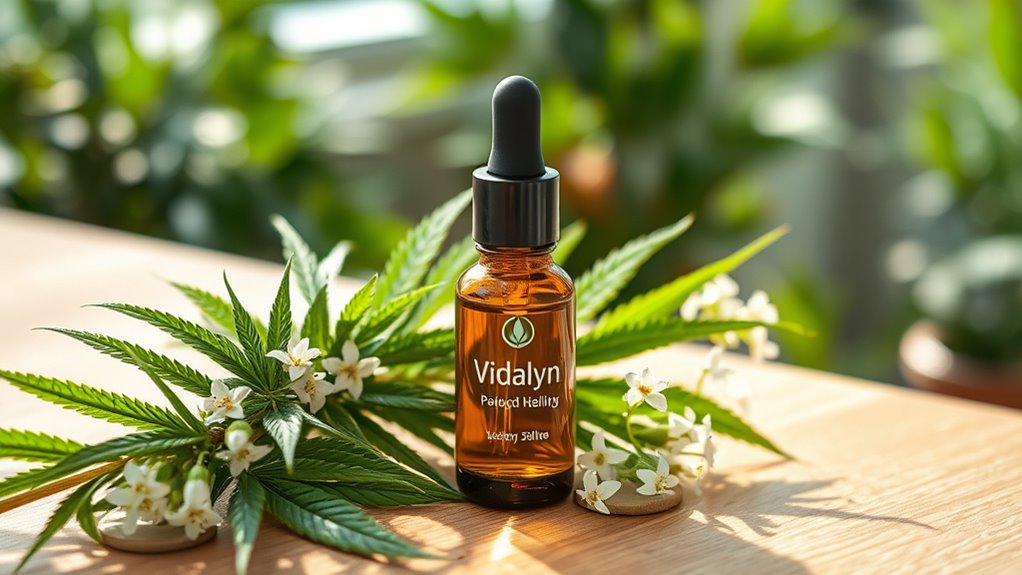
Vidalyn CBD is a cannabidiol (CBD) wellness product formulated to deliver CBD into your system, where it can interact with key components of the endocannabinoid network. By modulating cannabinoid interactions, CBD can influence signaling pathways involved in stress, inflammation, and sensory processing. Evidence from preclinical and clinical research suggests CBD does not act like classic THC agonists at CB1/CB2; instead, it alters receptor availability and neurotransmitter balance, including effects on FAAH activity and downstream endocannabinoid tone. When you’re considering use, dosage recommendations should be individualized and started low, since CBD’s pharmacokinetics vary by formulation and with factors like body weight and concurrent medications. Track effects and tolerability, because therapeutic responses are dose-dependent and mechanism-specific.
Which Ingredients Might Be Inside Vidalyn CBD
You’ll usually see a cannabinoid profile centered on CBD, often alongside trace amounts of THC, CBG, and other minor cannabinoids, because these compounds can modulate endocannabinoid signaling pathways like CB1/CB2 interaction and downstream neurotransmitter release. You may also notice supporting botanicals and terpenes, since terpenes such as β-caryophyllene and linalool have receptor-linked and anti-inflammatory effects that could complement CBD’s mechanisms. To assess what’s truly in Vidalyn CBD, check the Supplement Facts for specific cannabinoid/terpene identities and their quantified amounts.
Common Cannabinoid Profile Breakdown
Although product-specific lab reports vary, most “CBD wellness” formulas rely on a predictable set of cannabinoid inputs sourced from hemp—typically CBD (cannabidiol) plus trace amounts of other cannabinoids generated by the same plant biosynthetic pathways. You’ll often see Δ9-THC kept low due to legal/quality controls, while minor cannabinoids (like CBG, CBC, and sometimes trace CBN) may accompany CBD. Evidence suggests cannabinoid interactions can shift receptor and enzyme activity: CBD modulates endocannabinoid signaling indirectly (e.g., FAAH inhibition) and may alter CB1/CB2 downstream tone, supporting therapeutic potential across inflammatory, nociceptive, and mood-related pathways.
| Cannabinoid | Typical role |
|---|---|
| CBD | modulator; indirect endocannabinoid effects |
| CBG | precursor; may influence inflammatory signaling |
| CBC | anti-inflammatory potential via non-CB1 pathways |
| CBN | sleep-linked studies; weak CB1 activity |
| Δ9-THC | trace psychoactivity; potency-controlled |
Always verify a third-party COA for your batch.
Supporting Botanicals And Terpenes
Alongside CBD, many hemp-derived wellness formulas use selected supporting botanicals and terpenes that may complement cannabinoid signaling by engaging other inflammatory and neuromodulatory pathways. You may see adjunct botanicals such as gingerols, chamomile flavonoids, or turmeric curcuminoids; preclinical studies suggest they can modulate NF-κB signaling and oxidative stress, which aligns with CBD’s broader anti-inflammatory phenotype. Terpenes like β-caryophyllene (CB2-preferential agonist) and linalool (GABAergic and serotonergic-related activity in models) can potentially amplify calming outcomes, a form of botanical synergy. If Vidalyn includes them, you’d expect terpene effects to be dose- and matrix-dependent, influenced by extraction and lipid carriers that affect absorption and local receptor engagement.
How to Read the COA for Vidalyn CBD Products
When you review a Vidalyn CBD COA (Certificate of Analysis), focus on the specific test results tied to cannabinoid content, contaminants, and analytical methods, not on marketing claims. Use COA interpretation tips to check “Total CBD” and other cannabinoids reported with units and uncertainty; then look at THC limits, since receptor and pharmacokinetic effects scale with exposure. For contaminants, prioritize heavy metals, pesticides, solvents, and microbial counts—mechanisms link these to safety risk, and peer-reviewed methods emphasize detection limits. Confirm analytical methods (e.g., HPLC/GC) and dates, because different platforms can shift quantification. Understanding lab results also means reading pass/fail criteria and LOQ/LOD.
| COA section | What to verify |
|---|---|
| Cannabinoids | Total CBD, THC, units |
| Contaminants | Metals/pesticides/microbial |
| Methods | Assay type, LOD/LOQ |
Full-Spectrum vs Broad-Spectrum vs Isolate in Vidalyn
Choosing between full-spectrum, broad-spectrum, and isolate in Vidalyn matters because each format changes what actually gets into your bloodstream: full-spectrum products retain trace THC and other naturally occurring cannabinoids (plus terpenes), broad-spectrum keeps cannabinoids while minimizing or removing THC, and isolate is fundamentally purified CBD with little to no accompanying cannabinoids. You’ll see different mechanistic outcomes based on receptor and enzyme interactions reported in peer-reviewed pharmacology: cannabinoids modulate CB1/CB2 signaling and influence inflammatory pathways, while terpenes may affect membrane transport and metabolism.
- Full-spectrum benefits can reflect a broader phytocannabinoid profile
- Broad spectrum differences hinge on THC reduction while keeping multiple cannabinoids
- Isolate purity emphasizes a single active moiety, often clearer pharmacokinetics
- CBD extraction methods determine how much minor cannabinoid/terpene material remains
- Clinical relevance depends on bioavailability and co-compound interactions
What Dose Claims Should Look Like on Vidalyn Labels
On a Vidalyn label, dose claims should be specific enough to let you predict real-world exposure and pharmacology, not just total product “CBD per serving.” Look for clearly stated amounts of CBD (and, if it’s full- or broad-spectrum, how THC is handled), the serving size (mg per capsule/gummy or mg per mL), and any additional cannabinoids that could shift effects via CB1/CB2 signaling, inflammatory pathway modulation, or metabolism. Evidence from cannabinoid pharmacology supports this kind of label clarity for interpreting dose-response and drug–cannabinoid interactions. You should also see dosage guidelines: who the serving is intended for, how many servings to take, timing relative to meals, and whether incremental titration is recommended. If a label only gives averages without mg details, you can’t reliably estimate exposure, bioavailability, or adherence to dosage guidelines.
Testing Standards: Potency, Contaminants, and Pesticides
When you evaluate Vidalyn’s CBD product, prioritize potency verification using validated analytical methods (e.g., HPLC/UPLC with appropriate calibration and LOD/LOQ) so the labeled concentration matches the actual cannabinoid profile. Next, you should expect contaminant screening with specified limits for heavy metals, microbial burdens, and residual solvents, because these hazards can reflect processing failures rather than plant biology. Finally, you’ll want pesticide residue testing using multi-residue LC–MS/MS/GC–MS protocols across relevant analytes, since pesticide uptake and incomplete purification can directly alter consumer exposure.
Potency Verification Methods
You should verify CBD potency and safety using validated third-party lab methods, because accurate labeling depends on instrumental quantification rather than manufacturer claims. In potency testing, you’re confirming how much CBD (and sometimes minor cannabinoids) is actually present by chromatography-driven measurement, then comparing those lab results to the certificate of analysis. Peer-reviewed methods typically use HPLC/UPLC with validated calibration, where the detector response is tied to standards and instrument recovery. To keep your claims mechanism-credible, focus on:
- Independent sample handling and chain-of-custody
- Method validation (LOD/LOQ, linearity, accuracy)
- Calibration with certified reference materials
- Reporting units tied to extract and final product
- Replicate runs to quantify analytical variability
Contaminant Screening Protocols
Contaminant screening is the next checkpoint in a validated testing workflow, because your CBD’s safety profile hinges on whether regulated interferents—like residual solvents, heavy metals, pesticides, mycotoxins, and microbial contaminants—are below method-validated limits. You rely on safety protocols that specify sampling integrity and analytical selectivity, so potential contaminants are quantified at detection thresholds tied to regulatory compliance standards. Your testing procedures should use validated methods with appropriate extraction, calibration, and matrix controls to prevent false negatives caused by interference. Peer-reviewed approaches emphasize risk-reduction mechanisms: metals can catalyze oxidative damage, while microbial and mycotoxin loads reflect upstream growth conditions. Confirm lab certifications, document quality assurance, and publish results to support product transparency.
Pesticide Residue Testing
Pesticide residue testing is essential because regulatory compliance depends on quantifying specific agrochemical residues in CBD with validated analytical selectivity and sensitivity, not just general “pass/fail” statements. You should treat pesticide sources as variable inputs that drive residue risks through crop uptake, persistence on surfaces, and carryover into extraction. Use LC-MS/MS or GC-MS methods with accredited QA/QC, calibration, recovery checks, and LOD/LOQ established for each analyte class, since mechanism-based toxicology links parent compounds and metabolites to potential adverse effects. Key standards to verify include:
- Method validation, including matrix effects control
- Quantification across relevant MRL thresholds
- Scope covering organophosphates, pyrethroids, and fungicides
- Reporting of non-detects with LOQ transparency
- Batch traceability from raw biomass to finished product
Common Red Flags in Vidalyn CBD Marketing Claims
Even if Vidalyn CBD labels sound compelling, several recurring marketing patterns raise red flags because they outpace what current peer-reviewed evidence can support about CBD’s effects in humans. You may notice misleading testimonials implying curing conditions, yet clinical trials typically evaluate outcomes like seizure reduction in specific indications, not broad “wellness” claims. You might also see exaggerated benefits: promises of pain relief, anxiety control, or sleep improvement without stating effect sizes, study designs, or confidence limits. Mechanistically, CBD’s actions—such as modulation of endocannabinoid signaling and potential interactions with CYP enzymes—don’t translate into guaranteed results across all users. Watch for undisclosed dosing, “proprietary blends” that obscure active amounts, and vague compliance language that sidesteps regulatory limits.
Possible Benefits People Seek From Vidalyn CBD
You might use Vidalyn CBD to support potential calm and stress relief, since CBD can modulate signaling tied to anxiety-related pathways (e.g., serotonin and GABA) observed across preclinical models. You may also be looking for daily wellness support, where regular intake could help maintain stress resilience and improve sleep quality in some people—effects that have been reported in clinical studies with purified CBD for specific indications. When you assess these goals, focus on mechanistic plausibility and study endpoints rather than broad, unverified claims.
Potential Calm And Stress Relief
When stress ramps up, many people look for compounds that can support calmer signaling rather than masking symptoms. With Vidalyn CBD, you may seek potential calm and stress relief through mechanisms tied to the endocannabinoid system. Evidence from peer-reviewed studies suggests CBD can modulate neural excitability and influence neurotransmitter release, which may help temper stress-related reactivity and support stress management.
- Targets CB1/CB2–linked pathways indirectly
- May reduce anxiety-like behaviors in preclinical models
- Can affect serotonin and GABA signaling associated with calming effects
- Helps regulate the HPA axis response to stressors
- Often shows dose-dependent effects on inflammation-related signaling
You’re not “turning off” stress—you’re aiming for a steadier neurochemical balance.
Support For Daily Wellness
For people building a daily wellness routine, Vidalyn CBD may be sought for its potential to support steadier endocannabinoid signaling across the day. You’re aiming for wellness integration that fits real daily routines, not isolated moments. Mechanistically, CBD can interact with cannabinoid-related targets and influence pathways tied to the endocannabinoid system, including indirect modulation of FAAH activity and effects on adenosine signaling and serotonin receptors. In peer-reviewed research, these mechanisms are linked to regulation of stress-responsive systems and maintenance of homeostatic tone, which may translate into smoother physiological “baseline” rather than sedation. If you use Vidalyn consistently, the goal is to support endocannabinoid balance during normal circadian cycling, potentially improving how you feel between demanding periods.
Potential Side Effects and Who Should Use Caution
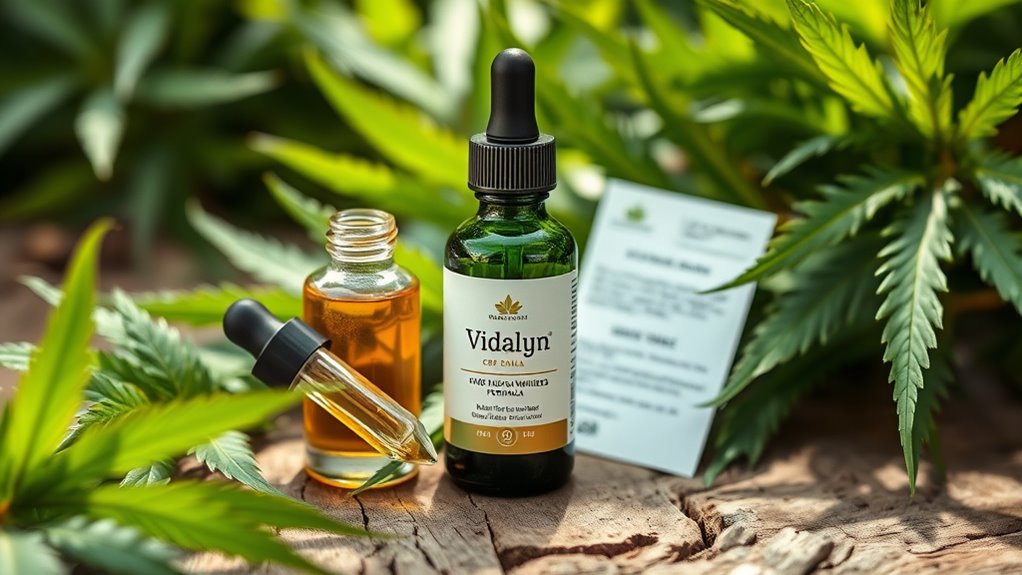
Even though Vidalyn CBD Wellness Formula is marketed for general wellness, CBD can still affect drug metabolism and neurological signaling, so side effects are possible—especially at higher doses or in sensitive users. Peer-reviewed studies show CBD can inhibit CYP enzymes, raising levels of certain medications; this is where potential interactions matter. You may also experience sleepiness, diarrhea, appetite changes, or elevated liver enzymes, reflecting dose- and susceptibility-dependent pharmacology. Some user testimonials report feeling “too relaxed” or unwell after increasing dosage, though individual responses vary.
- Drowsiness or dizziness
- GI upset (nausea/diarrhea)
- Changes in appetite
- Elevated ALT/AST with long-term/high dosing
- Higher risk with liver disease
Use caution if you’re pregnant, have hepatic impairment, or take anticonvulsants, anticoagulants, or sedatives.
How Vidalyn Compares to Other Trusted CBD Brands
If you’re weighing Vidalyn against other trusted CBD brands, the key difference usually comes down to product consistency and how CBD’s pharmacology shows up in real dosing: CBD’s CYP enzyme inhibition and concentration-dependent receptor effects mean that variability in labeled strength, extraction process, and third-party testing can translate into different exposure and side-effect risk. In a Vidalyn comparison, you should prioritize whether the brand uses standardized extraction, matches certificate-of-analysis (COA) potency across lots, and reports residual solvents and contaminants. Peer-reviewed pharmacokinetic data suggest that when CBD doses drift, downstream effects on CYP2C19/3A4–mediated metabolism and potential drug–drug interactions shift too. With trusted brands, tighter COA–to-label alignment improves predictability, helping you avoid unexpected highs, lows, or tolerance changes.
How to Choose the Right Vidalyn CBD Product for You
Choosing the right Vidalyn CBD product comes down to matching a specific CBD dose and route to your desired outcome, since CBD’s effects are mediated by pharmacology that’s sensitive to concentration and metabolism—especially its inhibition of CYP enzymes (notably CYP2C19 and CYP3A4) and downstream changes in drug clearance. To choose well, align personal preferences and lifestyle factors with evidence: start low, titrate carefully, and account for drug interactions.
- Select the route: sublingual vs oral changes absorption speed and peak levels.
- Target dose: use product mg-per-serving, not “strength” claims.
- Check other meds: CYP2C19/CYP3A4 inhibition can elevate co-administered drugs.
- Consider consistency: same routine improves pharmacokinetic predictability.
- Match goals: sleep, stress, or recovery may require different dosing timing.
Common Questions
Is Vidalyn CBD Legal in All 50 States?
No—you can’t assume Vidalyn CBD is legal in all 50 states. CBD regulations vary by state, so state compliance differs. Legality concerns depend on THC limits, product sourcing, and whether it’s marketed as hemp-derived versus other cannabis forms. Evidence-driven guidance usually comes from state statutes and peer-reviewed findings that CBD’s effects don’t override legal thresholds. To protect consumer rights, check your state’s hemp/CBD law and confirm the product’s lab-tested THC content.
Does Vidalyn Contain THC, and Will It Show on Drug Tests?
Yes—Vidalyn may contain trace THC depending on the specific batch and whether it’s truly “0.0%” THC; hemp products can have legally allowable residual THC. For drug testing, THC content is what matters: standard urine immunoassays detect THC metabolites (THC-COOH) if enough exposure occurred, with confirmation by GC/MS if positive. Evidence shows metabolism drives detectability, so even small THC can trigger tests, especially with frequent use.
How Long Does Vidalyn Take to Work, and How Quickly Can I Feel Effects?
You’ll typically notice effects from Vidaly*n* within about 15–45 minutes after taking it; some people feel it later, up to ~2 hours. Onset time depends on individual factors like dose, whether you took it with food, your metabolism, and product form. Mechanistically, CBD modulates endocannabinoid signaling and can influence anxiety, pain perception, and sleep pathways, which explains delayed, gradual effects. Evidence in clinical literature supports a time-dependent response curve.
Is Vidalyn Safe to Use With Medications or Alcohol?
Yes—Vidalyn may be unsafe with some medications or alcohol. CBD can cause drug interactions by inhibiting CYP450 enzymes (notably CYP3A4/2C19), changing blood levels of anticoagulants, antiepileptics, sedatives, and some antidepressants. Alcohol effects can also worsen CNS depression, increasing dizziness and impaired coordination. You should check your specific labels and talk to a clinician or pharmacist before combining, especially if you take narrow-therapeutic-index drugs.
Where Are Vidalyn Products Manufactured, and Who Oversees Quality Control?
Vidalyn products are manufactured in GMP-licensed facilities, where manufacturing standards are documented, audited, and continuously monitored. You should expect quality assurance to include COA testing, contaminant screening (heavy metals, pesticides, microbes), and batch traceability, using validated analytical methods. Oversight typically falls to internal QA teams plus third-party labs that verify potency and purity—so what’s in the bottle matches the mechanism-based specs, not marketing claims.
Overall
When you’re evaluating Vidalyn CBD, look for a clear, evidence-informed mechanism: cannabinoids like CBD (often alongside trace THC and supporting compounds) may help modulate endocannabinoid signaling tied to stress response and inflammation pathways. Choose formulas that prioritize safety with rigorous contaminant screening and a readable COA (Certificate of Analysis), so you can verify potency and rule out common risks like heavy metals, pesticides, and residual solvents. That transparency is what makes the product selection process feel grounded, not guesswork.
Ready to make a thoughtful change? Start with individualized dosing based on your needs, track how you feel over time, and pay attention to any potential side effects or relevant cautions—especially if you’re pregnant, nursing, or taking medications. Taking the first step with a plan can be a refreshing way to explore CBD wellness with confidence, accountability, and better-informed expectations.